
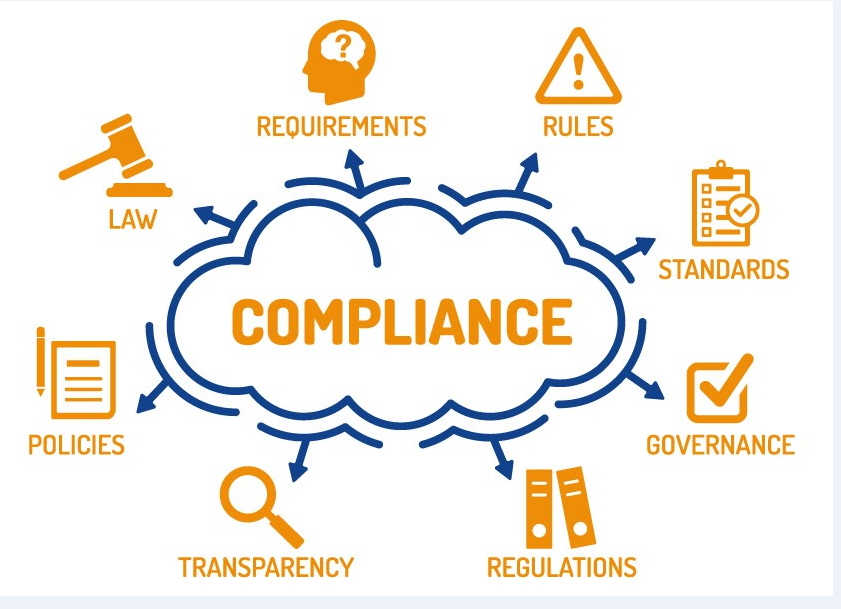
Business Compliance Requirements in Bangladesh: A Complete Advisory Guide
Running a business in Bangladesh carries significant regulatory responsibilities. From the day you register your company to every year of operation, you are required to meet a comprehensive set of legal, tax, and financial compliance obligations — obligations that evolve constantly as the regulatory environment matures. Failing to meet these requirements does not just invite penalties; it can damage your reputation, restrict your access to credit, and in serious cases, result in the suspension of your trade licence.
This is where professional compliance advisory becomes essential. At SAM & Associates, we have guided businesses of all sizes through Bangladesh’s compliance landscape since 2013 — helping them stay current, avoid penalties, and build the institutional credibility that enables growth. This guide covers everything a business owner or corporate manager needs to know about compliance in Bangladesh.
What Is Compliance Advisory?
Compliance advisory is the professional service of helping businesses understand, implement, and maintain adherence to all applicable laws, regulations, and standards governing their operations. In Bangladesh, this spans corporate law, tax legislation, VAT regulations, labour law, financial reporting standards, and sector-specific licensing requirements.
A compliance advisor does not simply tell you what the rules are — they proactively monitor regulatory changes, assess your current compliance position, identify gaps, and implement corrective measures before those gaps become costly violations. Effective compliance advisory is therefore both reactive (fixing problems) and preventive (avoiding them entirely).
At SAM & Associates, our compliance advisory services are integrated with our accounting, tax consultancy, and audit and assurance practices — ensuring that compliance is embedded into every aspect of your financial management, not treated as a separate afterthought.
Why Compliance Advisory Is Essential for Businesses in Bangladesh
Bangladesh’s regulatory framework is administered by multiple authorities, including the National Board of Revenue (NBR), the Registrar of Joint Stock Companies and Firms (RJSC), the Financial Reporting Council (FRC), and the Bangladesh Bank. Each authority has its own requirements, filing cycles, and enforcement mechanisms. For any business managing multiple compliance streams simultaneously, the administrative and technical complexity is substantial.
The Real Cost of Non-Compliance in Bangladesh
| ⚠ Key Penalties for Non-Compliance in BangladeshIncome tax default: Surcharge of 2% per month on unpaid tax, plus penalties up to 50% of tax payable (Income Tax Act 2023)VAT non-compliance: Penalty of BDT 10,000–50,000 per violation; interest at 2% per month on unpaid VATRJSC annual return failure: Late filing penalties and potential striking off the company registerAudit non-compliance: Inability to secure bank loans, loss of investor confidence, regulatory scrutinyTrade licence lapse: Forced closure of operations, potential criminal liability for directors |
Core Business Compliance Requirements in Bangladesh
Business compliance in Bangladesh operates across several distinct regulatory domains. Understanding each is the foundation of a sound compliance strategy.
1. Company Registration and Corporate Compliance (RJSC)
Every private limited company, public limited company, and partnership operating in Bangladesh must be registered with the Registrar of Joint Stock Companies and Firms (RJSC). Corporate compliance obligations include:
- Annual Return submission to RJSC (Form XII) — required within 21 days of the AGM
- Maintenance of statutory registers (shareholders, directors, charges)
- Filing of special resolutions and changes in directors or share structure
- Holding Annual General Meetings (AGMs) within prescribed timeframes
- Compliance with Bangladesh’s Companies Act 1994 (and proposed amendments)
2. Income Tax Compliance (NBR)
All registered businesses in Bangladesh are required to maintain tax compliance with the National Board of Revenue under the Income Tax Act 2023:
- Obtain and maintain a valid e-TIN (Electronic Tax Identification Number)
- Submit annual income tax returns by the prescribed deadline (typically 30 November for companies)
- Deduct and deposit withholding tax (WHT) on applicable payments monthly
- Pay advance income tax (AIT) in quarterly installments
- Maintain proper books of account to support tax assessments
- Respond to tax audit notices and assessment orders within prescribed timelines
3. VAT and Supplementary Duty Compliance (NBR)
Bangladesh’s VAT and Supplementary Duty Act 2012 is one of the most operationally demanding compliance areas for businesses:
- VAT registration is mandatory for businesses with annual turnover above the registration threshold
- Monthly VAT returns (Mushak-9.1) must be filed by the 15th of the following month
- Proper maintenance of VAT registers and Mushak forms for all transactions
- Issuance of VAT challan (tax invoice) for all taxable supplies
- Input tax credit (ITC) claims must be substantiated with valid Mushak-6.3 invoices
- VAT deduction at source (VDS) obligations apply to certain payers
4. Financial Reporting and Audit Compliance (FRC / ICAB)
Businesses meeting defined size thresholds in Bangladesh are required to prepare financial statements in accordance with Bangladesh Financial Reporting Standards (BFRS) and have them audited by a qualified Chartered Accountant. The Institute of Chartered Accountants of Bangladesh (ICAB) oversees the auditing profession, while the FRC sets financial reporting standards. Our Audit & Assurance Services ensure your financial statements meet all applicable standards — and stand up to regulatory review.
5. Trade Licence and Sector-Specific Licensing
All businesses operating in Bangladesh must hold a valid trade licence issued by the relevant City Corporation or Municipal authority. In addition, sector-specific licences may be required from:
- Bangladesh Investment Development Authority (BIDA) — for foreign investment entities
- Bangladesh Securities and Exchange Commission (BSEC) — for capital market participants
- Insurance Development and Regulatory Authority (IDRA) — for insurance companies
- Directorate of Drug Administration — for pharmaceutical businesses
- Ministry of Commerce — for import/export registration (IRC/ERC)
6. Labour Law and Employee Compliance
The Bangladesh Labour Act 2006 (amended 2013 and 2018) mandates a range of employment compliance obligations that businesses frequently overlook:
- Provident Fund (PF) and Gratuity Fund establishment for eligible employees
- Worker Profit Participation Fund (WPPF) — 5% of net profit for manufacturing entities
- Annual wage statements and salary records maintenance
- Service book maintenance for all permanent employees
- Compliance with working hour limits, leave entitlements, and termination procedures
Bangladesh Business Compliance Calendar: Key Obligations at a Glance
| Compliance Area | Governing Authority | Key Deadline | Frequency |
| Income Tax Return (Company) | NBR | 30 November | Annual |
| Withholding Tax Deposit | NBR | 7th of following month | Monthly |
| Advance Income Tax (AIT) | NBR | Quarterly installments | Quarterly |
| VAT Return (Mushak-9.1) | NBR | 15th of following month | Monthly |
| Annual Return (RJSC) | RJSC | Within 21 days of AGM | Annual |
| Audited Financial Statements | FRC / ICAB | Before AGM | Annual |
| Trade Licence Renewal | City Corporation / Municipality | Annually (dates vary) | Annual |
| WPPF Contribution | Ministry of Labour | Within 9 months of FY end | Annual |
| TDS Certificate Issuance | NBR | Within 30 days of deduction | As applicable |
| Import/Export Licence Renewal | Ministry of Commerce | Annually | Annual |
| Is your business meeting all compliance deadlines?A missed filing can trigger penalties that far exceed the cost of professional advisory. Let SAM & Associates audit your compliance position today.👉 Book a Compliance Review — samconsultantbd.com/contact-us/ |
Our Compliance Advisory Process at SAM & Associates
Compliance is not a one-time exercise — it is an ongoing discipline. Our advisory process is designed to give businesses continuous, proactive compliance management rather than reactive crisis handling.
Phase 1: Compliance Gap Assessment
We begin every new engagement with a structured compliance audit of your current position — reviewing your registration status, tax filings, VAT records, financial statements, labour obligations, and licensing. This assessment produces a compliance gap report with prioritized remediation steps.
Phase 2: Remediation and Regularization
Where compliance failures exist, we move quickly to remediate. This may involve filing overdue returns, paying outstanding tax with negotiated reduced penalties, restoring lapsed registrations, or preparing backdated financial records. Our longstanding relationships with NBR and RJSC facilitate smoother resolution processes.
Phase 3: Systems and Controls Implementation
Once your compliance position is regularized, we work with your finance team to implement the accounting systems, internal controls, and filing calendars that prevent future lapses. This is supported by our accounting services team, who can provide ongoing bookkeeping, VAT management, and management account preparation.
Phase 4: Ongoing Advisory and Monitoring
Regulatory requirements in Bangladesh evolve frequently. Our compliance advisory retainer keeps you updated on relevant changes — whether it is a new NBR circular, an RJSC procedural update, or an FRC standard amendment — so you are never caught off-guard.
Why Choose SAM & Associates for Compliance Advisory in Bangladesh?
Bangladesh has no shortage of accounting firms — but few offer the depth of regulatory expertise, integrated service model, and decade-long track record that SAM & Associates brings to compliance advisory.
| What Sets Us Apart | What It Means for Your Business |
| Founded 2013 — over a decade of Bangladesh practice | Deep knowledge of regulatory history and current requirements |
| Integrated accounting, tax, VAT, and audit services | One firm manages all your compliance streams coherently |
| Chartered Accountant-led practice | Advice meets the highest professional and ethical standards |
| NBR, RJSC, and FRC familiarity | Faster resolution of compliance issues through established channels |
| Cross-sector client portfolio | Sector-specific compliance insights from manufacturing to NGOs |
| Proactive regulatory monitoring | You are informed of changes before they become your problem |
Our services extend beyond standard compliance to include student visa financial documentation for individuals requiring embassy-standard financial proofs — another area where accuracy and compliance with specific institutional requirements is critical. Browse our full insights on the SAM & Associates blog.
Compliance Requirements by Business Type in Bangladesh
Different entity types in Bangladesh carry different compliance burdens. Understanding your specific obligations is the starting point for building an effective compliance programme.
| Business Type | Key Compliance Obligations | Priority Advisory Need |
| Sole Proprietorship | Trade licence, TIN, income tax return, VAT (if applicable) | Tax filing, VAT registration and return management |
| Private Limited Company | RJSC annual return, audited accounts, income tax, VAT, AGM | Audit preparation, corporate governance, tax planning |
| Public Limited Company | All of above + BSEC reporting, public disclosure requirements | Financial reporting, BFRS compliance, investor relations |
| Partnership Firm | RJSC registration, partnership deed, joint tax filings | Profit allocation compliance, joint tax advisory |
| NGO / Non-Profit | NGO Affairs Bureau, NGOAB registration, foreign donation rules | Fund utilization compliance, donor reporting, audit |
| Manufacturing Entity | WPPF, Factory Act licence, customs/bond compliance, environment | Labour law compliance, export/import compliance advisory |
| Import/Export Business | IRC/ERC, customs compliance, bonded warehouse rules | Trade compliance, VAT on import, duty optimization |
Frequently Asked Questions About Business Compliance in Bangladesh
1. What are the most commonly violated compliance requirements by businesses in Bangladesh?
The most frequent violations include late or omitted VAT return filings, failure to deduct and deposit withholding tax on time, non-submission of RJSC annual returns, unaudited financial statements, and lapsed trade licences. These violations are disproportionately common among SMEs and growing businesses that lack dedicated finance or compliance teams — precisely the businesses that benefit most from professional compliance advisory.
2. How do I know if my business is VAT-registered or required to register in Bangladesh?
Under the VAT and Supplementary Duty Act 2012, businesses with annual turnover above the prescribed threshold are required to register for VAT with the NBR. The threshold and category of registration (standard VAT, turnover tax, or package VAT) depends on your business type and revenue. Our tax consultancy team can assess your VAT status and manage registration and ongoing compliance on your behalf.
3. What happens if my company misses the RJSC annual return deadline?
Missing the RJSC annual return deadline results in late filing penalties, and persistent non-compliance can lead to the company being struck off the RJSC register — effectively making the company legally non-existent. Restoration is possible but involves a formal legal process and additional costs. Proactive compliance advisory prevents this outcome by tracking and managing your RJSC obligations automatically.
4. Can SAM & Associates help if my business has existing compliance backlogs?
Yes — this is one of our most common engagement types. Many businesses approach us after years of inconsistent compliance, with outstanding tax returns, unfiled VAT returns, or RJSC defaults. Our team conducts a full compliance gap assessment, develops a remediation plan, and manages the regularization process — including negotiating with NBR where penalty waivers or reductions are applicable. Contact us to discuss your situation confidentially.